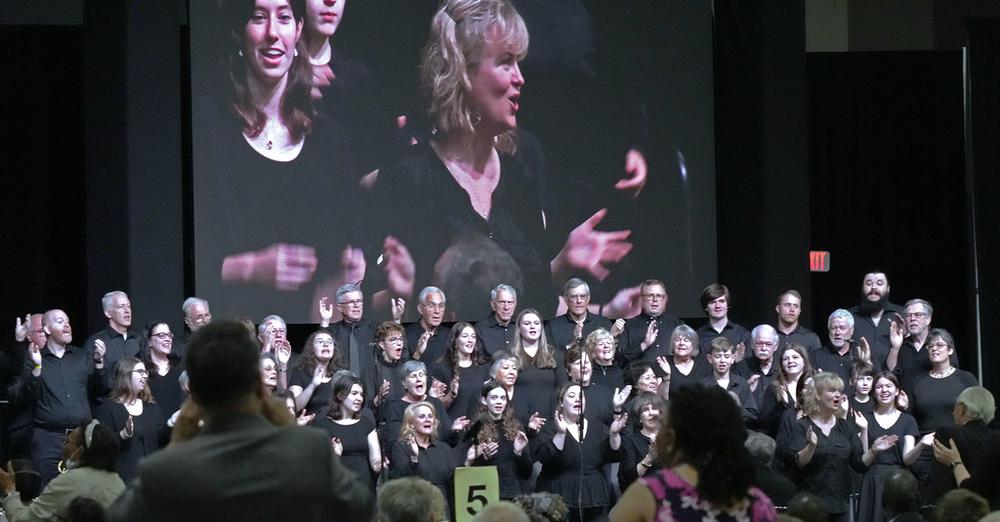
(photo from UM News)
Christ, the church you gave is broken. Spirit, come and make us whole
—from a hymn text by Bishop William Boyd Grove
As part of this morning’s worship, we welcomed representatives from various Christian denominations as a celebration of United Methodism’s fierce and longstanding ecumenical spirit. Indeed, part of what I love about United Methodism is its stubborn refusal to become idolatrous about its own place or status within the body of Christ. Instead, from the time of the Wesley brothers, there has been within the Wesleyan movement an eagerness to build relationships with other Christian traditions, fueled by the conviction that what we share commonly in Christ is far more substantive than anything that divides us.
At the heart of our ecumenical celebration today was an affirmation of the full communion that the United Methodist Church now shares with both provinces of the Moravian Church. If you know your Wesleyan history, you will remember that Moravian spirituality had a significant influence on the faith of both John and Charles Wesley. Today’s celebration of full communion with the Moravians, then, felt like a natural development. It was a true joy to join with other delegates today in reading these words from the Moravian book of worship: “The church is a single body of interdependent members, each having a place and a purpose.”
Interestingly, as part of our legislative work this week, the General Conference also approved full communion with the Episcopal Church in the United States, which represents the culmination of years of ecumenical work. If the Episcopalians approve the full communion in the months ahead, it will become yet another milestone in American ecumenism.
Worth noting is the fact that, as part of our ecumenical focus today during morning worship, we sang a powerful hymn, the text of which was written by the late Bishop William Boyd Grove. Bishop Grove was elected to the episcopacy out of Western Pennsylvania and was a strong voice of encouragement for me throughout my life. In his hymn, entitled “Christ, the Church You Gave Is Broken,” Bishop Grove crafted these words:
Christ, the church you gave is broken,
Mend it now through us, we pray;
That the message it has spoken
May be heard through us today.
Make us one now, make us one now,
In this troubled, frightened hour.
Indeed. And amen.
To put an exclamation point upon today’s celebration of ecumenism, our preacher this morning—Rev. Dr. Jerry Pillay, General Secretary of the World Council of Churches—challenged us to see ecumenical relationship as an opportunity to establish a more expansive Christ-centered justice in the world. “The task of the church,” Rev. Dr. Pillay preached, “is to speak and live prophetically in the face of the world’s various injustices—gender justice; climate justice; economic justice; racial justice; even digital justice. Where is mercy, after all, when suffering and injustice are tolerated?”
We were in plenary session all day long until 6:50. In addition to approving a very important consent calendar (more on that in a moment), delegates spent most of their time and energy today discussing and debating legislation that has significant financial impact on the denomination, since matters with financial impact must be acted upon before a denominational budget can be approved. Here is the long and short of it: This afternoon, the General Conference passed a new “base rate” for The United Methodist Church’s apportionment formula. (Apportionments are the proportional missional giving amounts assigned to each Annual Conference, which the Annual Conference then apportions to local churches. These apportionments are what fund the global ministry of the United Methodist Church.) Because of a smaller number of congregations following a season of disaffiliation, delegates today approved the lowering of the current base rate of 3.29% to a base rate of 2.6% for 2025 and 2026. Then, if the apportionment collection rate is 90% or higher during those years, the base rate will move back to 2.9% for 2027 and 2028.
The bottom line is this: U.S. annual conferences will be asked to pay lower apportionments over the next few years. Also, denominational ministries that rely on those apportionments — including general boards and agencies and episcopal leadership — will need to budget with those reductions in mind.
It felt like we did hard but important work to rightsize our budget framework for the current reality. There was not a spirit of gloom in the room either. Far from it, there was a sense of eager hope, emerging from our shared realization that we have become a different kind of church—one that is poised for a unique ministry in this new day.
Now, back to the consent calendar we approved today.
Through the approval of today’s consent calendar, delegates quietly and without plenary debate began to remove or reverse church restrictions against LGBTQ persons. Some of those restrictions were strengthened and expanded at the 2019 special session of the General Conference. Having been a delegate at that conference in 2019, I can tell you that there was an entirely different spirit in the room today.
Here are some of the changes that the General Conference approved today through the consent calendar:
- The removal of a Disciplinary ban on denominational funding of LGBTQ ministry or anything that promotes the acceptance of homosexuality
- The removal of a Disciplinary ban on boards of ministry that prevented them from considering “self-avowed practicing homosexuals” as candidates for ministry, and the removal of the requirement that bishops rule such persons ineligible for ordination
- The elimination of mandatory penalties against those who officiate at same-sex weddings
- The adding of an allowance for gay clergy in good standing to be appointed to other annual conferences if an appointment is not available for them in their own annual conference
- The setting of a moratorium on judicial proceedings related to the current denominational bans related to LGBTQ ministry
There are substantive conversations still to have at General Conference about United Methodism’s policies concerning LGBTQ persons. Today’s legislative approvals, however, signal the advent of a new era of inclusiveness and advocacy. I realize that not everyone in United Methodism will celebrate this new era. Still, what I have just described reflects the efforts of a church that is poising itself in fresh ways to minister with all persons.
Today concluded with a special dinner for the delegations of the Western Pennsylvania, West Virginia, and Susquehanna Annual Conferences. It was good to spend time at table with leadership from these three neighboring regions.
Take heart, friends. God is good, all the time. Moreover, the grace of Jesus is sufficient for every day, including this one.
 A Gracious Graffiti