“The church was never built for our pleasure,” declared Bishop Jonathan Holston in his Episcopal Address during this morning’s plenary session. “Rather, the church was built for God’s purpose.”
After a centering time of morning worship today, Bishop Holston offered what I experienced as a rousing and insightful address on behalf of the Council of Bishops. Through both video segments and spoken narrative, the Bishop presented a sensitive overview of some of what has transpired over the last eight years in both the world and the ministry of the United Methodist Church: pandemic and isolation; political division and ecclesiastical schism; technological advancement and cultural achievement; horror and hope; weeping and rejoicing; death and life. Through it all, the United Methodist Church has continued to incarnate its mission to make disciples of Jesus Christ for the transformation of the world. Through several inspiring stories of the church at its very best, Bishop Holston reminded us that our denomination is still vibrantly and globally working to alleviate hunger, to care for the displaced and despondent, to generate hope among those who suffer, and to bring both the socially well-situated and the painfully marginalized into the reconfiguring grace of Jesus. The Bishop’s address both comforted me in my places of discouragement and unsettled me in places where I have become inappropriately comfortable. “When was the last time you led someone to Christ,” the Bishop inquired of those present. “And when was the last time you made a witness to Jesus through your life and decision-making?” I am still living with his questions as I reflect on what it will mean to become a church that, as the Bishop put it, “becomes a vibrant and continuing sign of God’s beautiful reign in the world.”
Following the Episcopal Address, delegates received a series of reports, the presentation of which led to the adoption of a General Conference agenda. We now have a clear sense of how we will be stewarding both our work and our time.
The rest of the morning plenary session included some important presentations:
A Report on the Revision of the Social Principles
What are the Social Principles? In short, the Social Principles are United Methodism’s thoughtful effort to speak to a wide variety of issues in the contemporary world from a sound biblical and theological foundation. In existence since 1972 and expanded significantly by every General Conference since, the Social Principles, while not considered church law, are an instructive guide for United Methodists as they endeavor to navigate often-complex social issues with both spiritual depth and ethical attentiveness. Later on in the General Conference, delegates will debate and take action on a revised collection of Social Principles, prepared and submitted by a global team of theologians and theological voices—both laity and clergy. The purpose of the revision of the Social Principles, according to today’s overview, is “to offer to the church a clearer, more concise, more deeply theological, and more authentically global resource.”
Here is a link to the revised Social Principles upon which the General Conference will be taking action:
As a quadrennial exclamation point upon United Methodism’s commitment to young people, General Conference includes a Young People’s Address, the purpose of which is to amplify the voices and illuminate the perspectives of those United Methodists between the ages of 18 and 35. Today, Alejandra Salemi from the Florida Annual Conference and Senesie T.A. Rogers from the UMC in Sierra Leone offered an address that was both stirringly poignant and pointedly challenging. From the deep hearts and the articulate voices of these two young disciples, I heard the naming of pain and anxiety produced by both a divided nation and a divided church—an anxiety that Salemi equated to the anguish of a divorce. I also heard in their words a profound challenge to become a church that is far more passionate about the love of Jesus than it is about resentment that leads to contempt. Said Rogers, “reconciliation and coming together is part of our tradition. We must be more about uniting than dividing at this point.”
A Report on the General Book of Discipline
As part of a larger conversation about the global regionalization of the United Methodist Church’s ministry (about which the General Conference will be making important decisions over the next ten days), delegates heard a presentation today about a proposed General Book of Discipline that would make certain portions of the Discipline more adaptable, thereby (according to the crafters of the legislation) allowing the various global regions of the church to structure mission and ministry in a manner that is most contextually appropriate and strategic. Envisioning a longer process of development, today’s presenters called for each region of the church to develop a means by which to review the proposed General Book of Discipline and offer feedback. While the denomination’s doctrinal standards remain unadaptable in this proposed Discipline, the hope behind the proposal is that the adaptable portions will make the UMC less US-centric and US-dependent in its polity and structure.
Reports on the Financial State of the Church and the Pathway to Our Next Expression
The General Council on Finance and Administration has proposed to the General Conference a quadrennial (2025-2028) denominational budget of approximately $353 million. This marks a nearly 42% reduction from the denomination-wide budget that General Conference approved at its last regular meeting in 2016, reflecting the impact of disaffiliation and the pandemic on the denomination. While this is sobering news, to be certain, the Council of Bishops and the Connectional Table voiced their commitment to the work of crafting a continuing vision for the church that we are becoming—a smaller church, but one that is uniquely poised for mission and ministry.
After lunch, delegates moved to their legislative sections that met in various rooms throughout the Convention Center. The agenda for each legislative section meeting was to elect section leaders and to organize the section for its legislative work. Here is a brief explanation of the legislative sections and their function: To care for the large volume of legislative proposals submitted to General Conference, each General Conference delegate is assigned to one of fourteen legislative sections. All the legislative proposals are divided among these legislative sections for discussion, debate, amendment, and, ultimately, action. If there are no more than 10 votes against a prevailing vote on a petition or resolution in a legislative section, it goes onto a daily consent calendar (along with many other petitions and resolutions approved by the various legislative committees). The entire daily consent calendar will then come before the plenary session of General Conference for a final vote.
I am in the Global Ministries legislative section. We elected our section leaders and organized ourselves for the pieces of legislation that we will be addressing over the next few days. Tonight, I am rereading my section’s legislation so that I might be prepared for tomorrow’s work.
There you have it, friends—a full day two of General Conference.
If you made it to the end of this post, thank you. I am grateful for your interest and your prayers.
Samuel Taylor Coleridge once wrote, “the ones who are best prepared can best serve their moment of inspiration.”
Today was a day of both preparation and inspiration for General Conference delegates. We spent the morning in a time of helpful training, offered by well-prepared leaders and officers. We learned about the General Conference rules and the parliamentary procedure by which we will operate, so that delegates might be ready to engage with our future legislative work in an informed and consistent manner. We learned about the various General Conference teams and committees so that we might better understand the particulars of our processes and procedures. We also trained on our electronic voting devices so that we might utilize them skillfully during deliberation and voting. (Holding my electronic voting device today inspired a smile or two over the remembrance of the handheld colored placards with which we used to vote at General Conference. Technology has made it a much different process, to be certain.)
Following lunch came some spiritual inspiration in the form of opening worship. Because of the pandemic, it has been five years since I have worshiped with a truly global congregation of United Methodists in a setting of the general church. Hearing the many robust voices joining together in hymns of praise and prayers of thanksgiving inspired within me both a freshly warmed heart and tears of gratitude. Bishop Thomas Bickerton preached a truly evocative and inspiring sermon, clearly and truthfully naming some of what we have gone through as a denomination over the last four years while also casting a bold vision for the reconfigured, revived, and mission-driven church we are becoming. It was the kind of sermon that established a deeply hopeful tone for this General Conference and life beyond it.
After the opening worship, the General Conference was officially called to order and we experienced our first plenary session during which we cared for preliminary organizational matters, including the adoption of our now-amended and perfected Plan of Organization and Rules of Order. To put it simply, before any General Conference can officially do its extensive work, it has to agree on the means and methodology by which it will accomplish that work. We successfully approved the rules and processes that will provide both structure and accountability throughout General Conference.
The day concluded with a 6:30 dinner, from which I just returned.
At one point in the day, I had some conversation with a group of volunteers who have come to Charlotte on their own dime and time to volunteer at General Conference. They had nothing but words of gracious encouragement for me. Throughout the morning and afternoon, I received over twenty texts and e-mails from people in Western Pennsylvania and New York letting me know that they are holding me (and us) in fervent prayer. I cannot put into words how life-giving it is to my spirit to know that so many people are praying. It makes prayer feel less like an activity and more like a sanctified communion of manifold souls.
Between lunch and opening worship today, I found a quiet and empty banquet room in a back hallway where I could experience a few moments of solitude—something important for this introvert to do periodically, especially in a conference where people are almost everywhere. During my moments of solitude, I rewrote one of my past prayers, contextualizing it specifically for day one of this General Conference. After writing it down, I prayed the words out loud this afternoon, simply for the purpose of allowing my heart to be shaped by its petitions.
This was my prayer:
Holy God—Father, Son, and Holy Spirit—who both transcends time and occupies it; who is intimately present with us in both our solitude and our conferencing; who has built the church on the rock of a grace-shaped faith, and who will preserve the church so that not even the power of death will prevail against it:
We have prayed and pondered for many months, and now we come together…
Many voices;
Many perspectives and temperaments;
Many different hopes, fears, and longings;
But with hearts joined in a common love for Jesus and the ministry of his beautiful church.
We come with a spirit of repentance, depending wholly on your reconfiguring grace that is always greater than our sinful rhythms and our distorted priorities.
We come in a spirit of vulnerable availability, eager to hear and to be heard;to see and to be seen; to love and to be loved.
Come, Lord Jesus.
Come, be the center of our discernment and our deliberation.
Come, be the thoughts that we think, the words that we speak,the air that we breathe.
Come, Lord Jesus.
Come, be the window through which we see one another differently; through which we recognize one another’s sacred worth; through which we glimpse what your church can be at its most vibrant.
Come, Lord Jesus.
Come be the Window, the Word, and the Way.
Come, Lord Jesus.
Amen.
I share this prayer with you here in the hope that it will deepen your spirit of intercession. Thank you for reading this post. And please, friends, keep praying.
I am currently in Charlotte, North Carolina, prayerfully focusing my thoughts and softening my heart for the work of the United Methodist General Conference which begins tomorrow (Tuesday).
If you are someone who has completely lost interest in denominational Christianity, and if current bureaucratic denominational realities either frustrate you or bore you to tears, believe me, I completely understand. Yet, since United Methodism remains a unique and beautiful portion of the body of Christ, it is important for those who love the ecumenical church to pay attention to what transpires in the ministry of its various denominations.
From April 23 through May 3, the United Methodist General Conference, to which I am an elected clergy delegate, will be in session at the Convention Center in Charlotte, North Carolina. What is the General Conference? It is a gathering of 862 elected delegates, which includes an equal number of clergy and lay delegates (431 of each). There will also be thousands of in-person guests, observers, interpreters, and volunteers. The 862 delegates come from all around the world, wherever United Methodism exists, and are elected by their particular regions. 482 of the delegates are from the United States. 278 are from Africa. 52 are from the Philippines. 40 are from Europe. 10 are from concordat Methodist churches in the Caribbean, Great Britain, Mexico, and Puerto Rico.
The General Conference, which normally meets every four years, is the only body that can establish policy and church law for the United Methodist Church.
Having been a part of five General Conferences throughout my ministry, I know from experience that there will be many different types of dialogue at General Conference. Much of that dialogue will be rich with hope and joy concerning new initiatives in the denomination’s ministry with young people, older adults, immigrants, and the poor. We will discuss new developments in United Methodism’s efforts to equip leaders, dismantle poverty, eradicate racism, transform lives, and bring souls into relationship with Jesus. We will also consider the possible regionalization of the denomination’s global ministry and whether such regionalization will help the global church to become more strategic and missional in both its structure and impact.
Sadly, there will also be some heartbreaking dialogue about division and disaffiliation, much of which will revolve around the denomination’s continuing and often-traumatizing debate over what to say, teach, and embody concerning human sexuality in general and homosexuality in particular—a debate that has occupied the emotional energy of every General Conference since 1972.
I know many LGBTQIA+ persons who feel particularly vulnerable in these matters, perhaps because of past trauma or because of too many heartbreaking struggles to feel fully accepted and valued in the church for the entirety of who they are. If I am describing you, please know that I hold you deeply in my prayerful heart as the long and important days of General Conference begin. Your faces in my thoughts are a vital portion of my inspiration to continue in this work. You do not stand alone in your pain, nor do you walk alone in your desire for a church that reflects more vibrantly the gracious and welcoming heart of God.
I invite those of you who care deeply about these matters, particularly those of you who are United Methodist, to engage in three specific disciplines. First, stubbornly resist the temptation to become cynical or resentful about the work of General Conference, especially if people attempt to take you down a toxically negative road. In my experience, a spirit of cynicism and resentment often leads to a heart that is cold, a temperament that is dismissive, and a discernment that is clouded by a distorted sense of absolute certainty. The United Methodist Church deserves better than that.
Second, be intentional about reminding yourself and others that the United Methodist Church’s difficult conversations about everything from human sexuality to regionalization—everything from the Social Principles to the particulars of disaffiliation—are not debates between people who love Jesus and people who don’t, or between people who believe in the Bible and people who don’t. Rather, the disagreements at General Conference are most often between devoted Christ-followers who have come to significantly different conclusions about how parts of the Biblical narrative are to be interpreted, honored, and applied. Remembering this can help us avoid the temptation to demonize those who are on the other side of a debate, even when we are convinced of their wrongness.
Third, pray without ceasing. Dare to believe that prayer is a sacred and mystical conduit through which the redemptive activity of God makes its way into human circumstances, sometimes transforming the circumstances and other times reconfiguring human hearts so that the circumstances can be more creatively managed. I am inviting you to believe in the power of prayer with me and to pray urgently for the United Methodist Church and its General Conference. Pray for the Western Pennsylvania delegation of which I am a part and all the delegations. Pray for the Bishops as they preside. Pray for the safe travels of all who will be making their way to Charlotte. Pray for all who are volunteering their very best time and energy to make the Convention Center as hospitable an environment as possible. Pray that people will treat one another with respect and patience, even when emotions run high. Pray for the protection of tender hearts and the nurturing of right priorities. Most of all, pray that the Holy Spirit will flow through the complicated rhythms of General Conference thereby helping the United Methodist Church to bear steady witness to the always-beautiful heart of God.
I am grateful to be part of a church that refuses to turn away from hard and important conversations. Likewise, I am humbled to be part of a church that believes that Jesus does good and redemptive work, even in the messy, potential-rich, and transformative conferencing of his people.
And ever has it been known that love knows not its own depth until the hour of separation.
Kahlil Gibran
I invite you to travel with me briefly into a hard but important portion of denominational Christianity.
Last evening, in the Western Pennsylvania Annual Conference of the United Methodist Church (the spiritual home from which I come and to which my heart is always joined), the lay and clergy members of the conference approved the disaffiliation of 298 (approximately 39.1%) of that conference’s United Methodist churches.
If you are not familiar with the narrative of what is transpiring in the United Methodist Church, you may be inclined to ask, “Why are United Methodist churches disaffiliating from the denomination?” There is much researchable information about the matter, although the various responses to the inquiry will differ in tone and substance depending upon the theological and practical vantage point of the one offering the response. To provide a bit of context, I will simply say that, from this writer’s perspective, the reasons for disaffiliation are complex and cover acres of important territory, the navigation of which has generated divergent visions for the honoring of ecclesiastical accountability, the content of the denomination’s missional priorities, the viability of unity amid theological diversity, and, perhaps most significantly, the nature of what the United Methodist Church will teach, permit, and prohibit concerning the stewardship and practice of human sexuality. The various responses to these issues, as one might expect, hinge on one’s hermeneutical approach to Scripture—the methodology by which Scripture’s content is both interpreted and applied, and the manner in which Scripture’s authority is both understood and honored.
I am not debating any of these matters in this post, and I ask you to respect my earnest request to avoid such debate here. My heart today is not combative but prayerful; not truculent, but tender; not resentful, but heavy over the reality of what has transpired in my home conference—a conference I love, in whose ministry I was raised, and where I spent the last three decades of ministry prior to our move to New York.
Even as I type these words, I am praying fervently for the Western Pennsylvania laity and clergy who are disaffiliating, many of whom figured prominently in my spiritual formation and vocational ministry. May the Holy Spirit fall upon them with power, that they might experience healing in their pain; that the best portions of their ministry might flourish; that their most Christ-honoring impulses will intensify; that their sanctification in Christ will expand; that their witness to the Gospel might shine brightly in every portion of their continuing discipleship; and that their hearts will be tender toward the denomination they are leaving.
I am praying with equal fervency for those Western Pennsylvania laity and clergy who are remaining United Methodist, many of whom have shaped my faith and my theological understanding. May the Holy Spirit fall upon them with power, that they might experience healing in their pain; that the best portions of their ministry might flourish; that their most Christ-honoring impulses will intensify; that their sanctification in Christ will expand; that their witness to the Gospel might shine brightly in every portion of their continuing discipleship; that their hearts will be tender toward those who have disaffiliated; and that their vision for the United Methodist Church’s ministry in Western Pennsylvania will lead to an even grander incarnation of the priorities of God.
May the conference leadership in Western Pennsylvania experience a healing rest in the days ahead (including a Bishop, Cabinet, and Conference Staff I dearly love; a Conference Board of Trustees I hold deeply in my heart; and all the lay and clergy leaders who have long devoted the best of their time and energy to the stewardship of these difficult matters).
May repentance and forgiveness be plentiful in Western Pennsylvania and throughout the United Methodist Connection.
May hurt give way to healing.
May resentment give way to transformational love.
May Wesleyan Christ-followers rediscover the urgency of doing no harm, accomplishing what is good, and attending upon all the ordinances of God.
Finally, may the love, grace, holiness, and truth of Jesus Christ be so dynamically present in the lives of the people called “Methodists” that there will be little if any inconsistency between who they are in their sanctuaries and who they are in every other place.
Let the great world spin for ever down the ringing grooves of change.
Alfred, Lord Tennyson
Borrowing Tennyson’s poetic imagery, I feel as though I am standing in a deep groove of change with my world wildly spinning. Each spin provides a different vantage point from which to remember the past, experience the present, and anticipate the future. Emotions are plentiful and bumping into one another with such regularity that it is difficult for me to determine where one emotion ends and another begins.
Today, December 31, is my last official day as the District Superintendent of the Butler District of Western Pennsylvania’s portion of the United Methodist Church—a ministry in which I have been profoundly honored to participate for the last five years. Since early 2018, I have walked alongside clergy whose integrity and faithfulness have shaped me and whose graciousness in sharing their hearts and lives with me has nurtured my own vulnerability. I have worked with dozens of churches, standing with faithful congregations in moments of grand celebration and heartbreaking grief. I have done my very best to help a number of congregations to navigate the new, complex, and unsettling terrain of denominational disaffiliation while at the same time providing leadership and encouragement to those congregations that will continue to be part of the United Methodist Church. I have toiled, discerned, laughed, played, and wept alongside a Bishop and Cabinet who have been my extended family and who are as gifted as they are knowledgeable, as pastoral as they are proficient, as wise as they are winsome. I have shared in ministry with a remarkable Conference Staff, the members of which honor and bless me with both their skillfulness and their friendship. I have experienced the ministry of the great Butler District alongside my dear friend and colleague, Thelma Castor, the Butler District Administrative Assistant, whose outstanding work has strengthened and graced the district for nearly three decades and whose presence in my life is a precious and beautiful gift that I will never lay aside.
I am pondering some of what transpired during the last half-decade: A pandemic and the protective protocols it necessitated. The illumination of a changing church seeking to know its place in a changing culture. Denominational division and disaffiliation legislation. Hard conversations about racism and human sexuality, about Biblical authority and divergent hermeneutics, about church decline and missional engagement. Shared affirmation of the valuing of children, the hungering for justice, and the mattering of black and brown lives. A steady proclamation of a Gospel that both transcends and transforms politics. Hundreds of church conferences and dozens of pastoral in-takes. The consistent outreach of a mission barn that blesses the local community with its ramp-building and the entire United Methodist connection with its disaster relief ministry. Dynamic new initiatives, creative mergers, and grief-laden church closures. Long and probing one-to-one conversations with hard-working clergy who were frequently weary, occasionally wary, and always eager to speak with energy about their vision for ministry and the joy of their salvation. Lunch conversations, both serious and silly, in quiet corners of the Conference Center. Life-giving engagement and hearty laughter with dear friends in the Conference Center lobby. These have been some of the major plot points in the narrative of my last five years of ministry. I am wholeheartedly grateful for all of them, even the most difficult ones.
If I have been at all effective in my work as District Superintendent, to God be the glory. Wherever I have failed, floundered, or caused harm in any way, I offer a spirit of repentance and ask your forgiveness.
January will be a time of transitional leave in my vocation and a time of relocation for Tara and me. Stacks of packed boxes surround me as I type these words, reminding me of the nearness of our move date. On January 10, weather permitting, a moving truck from New York City will come to our home near Zelienople, thus beginning a four-day move that will hopefully conclude on January 13 with the successful unloading of our belongings at our new parsonage—a lovely condo in the Sutton Place neighborhood of Manhattan. On February 1, I will become the new Senior Pastor of a marvelous church whose history is richly textured and whose current ministry is wonderfully multilayered: Christ Church, United Methodist, NYC.
The yearlong process leading to my new appointment has been graciously and patiently overseen by two exceptional Bishops, an attentive District Superintendent in the New York Annual Conference, and two teams of leaders in the life of Christ Church NYC who were entrusted with the responsibility of participating in a lengthy season of discernment that demanded the very best of their energy. I have been well cared for throughout the process, for which I am deeply thankful.
This transition means a great deal to Tara and me.
It means leaving a Conference we dearly love—Western Pennsylvania. This is where we met Jesus and learned what it means to love and follow him. This is where we experienced our spiritual upbringing, our call to ministry, and our call to marriage. This is where I have served as a pastor for the last thirty-one years. I love this Conference, its ministry, its staff, its Cabinet, and its churches. Leaving it is hard—hard like leaving a beloved family and a cherished home. The grief that we carry is both lasting and painfully real.
Accompanying the grief is an authentic and joyful excitement over a new appointment that feels like a pathway into vocational renewal:
This new appointment will mean a return to the rhythms and patterns of the local church.
It will present a steep and exciting learning curve that will require the figuring out of what it means to live in New York (a city to which we have long been drawn); what it means to be appointed in a different United Methodist conference; and what it means to serve a stunningly dynamic church in the heart of Manhattan.
It will afford an opportunity to honor the extraordinary legacy of ministry and leadership bequeathed to me and to so many by Rev. Dr. Stephen Bauman, who has served as the Senior Pastor of Christ Church NYC for the last thirty-five years.
It will place me alongside the creative, accomplished, and mind-bogglingly gifted staff of Christ Church NYC, the members of which have faithfully and skillfully helped the congregation to navigate this year of transition with hope, joy, and vision.
It will usher us into a beautiful and diverse congregation whose people are deep-hearted followers of Jesus—as prayerful as they are justice-seeking; as prophetic as they are hospitable; as brilliant as they are kind.
I am grateful for so many things in all of this:
For a vocational adventure that I neither initiated nor expected.
For the Western Pennsylvania Conference that is sending me forth and for the New York Conference that is welcoming me into its ministry.
For the Bishop and Cabinet whose table I am leaving and for the Bishop and Cabinet who will now oversee my ministry.
For a new congregation and staff that I cannot wait to join.
For Rev. Deborah Ackley-Killian, my beloved colleague and friend, who will succeed me as the Butler District Superintendent on January 1, serving as the District Superintendent of both the Butler and Pittsburgh Districts.
For the honor of being Tara’s husband; for her love, her music, her playfulness, her encouragement, her wisdom, and her relentless joy; and for her continuing employment as the Vice President of Human Resources for Vector Security—a work that she will now steward remotely and virtually from an office in our new parsonage.
For the saving, sanctifying, unsettling, and comprehensive grace of Jesus in which even newness feels like home.
It is this grace of Jesus that makes the world’s wild spinning feel somehow manageable.
It is this grace of Jesus that generates joy, hope, and purpose, even in the ringing grooves of change.
If you are not connected to my religious tribe, you may be completely unaware of an intense and multilayered conversation that continues to occupy the energy of that portion of the Christian family in which I live out my faith and vocation: The United Methodist Church.
It is a conversation about division and disaffiliation
It is a conversation about orthodoxy and orthopraxy and their relationship to one another.
It is a conversation about human sexuality and what the church will teach about it.
It is a conversation about Biblical holiness and what it means to practice it.
Much of the conversation these days, unfortunately, is accusatory and disparaging in multiple directions, nurtured by those so absolutely certain of their own rightness (about one thing or another) that they feel justified in their methodology. If you pay attention to some of the conversation, you will hear multiple references to the goodness of “blessing one another,” even in the case of disaffiliation. What complicates the work of blessing one another, however, is the absence of both a shared understanding of what it means to “bless” and a shared commitment to stewarding that blessing in a manner that invites generosity and honors accountability. It is a messy set of circumstances, to be sure, made even messier by a widespread eagerness on the part of the church’s people to assume the very worst about one another and to articulate vitriolic viewpoints loudly in the various chambers of social media (where everyone gets to hold a microphone, irrespective of the degree of wisdom, care, or sensitivity with which they use it).
A number of people with whom I have journeyed for many years have already made the decision to leave the United Methodist Church and live out their faith elsewhere. The most publicized motivation behind their departure is their anger over what they believe to be unaddressed violations of the 2016 Book of Discipline’s restrictions concerning the practice of homosexuality—restrictions they believe to be absolutely essential if both the Bible’s teaching and the church’s law are to be honored. (Said one pastoral colleague to me recently, “If denominational leaders had just been faithful about bringing punishment to the violators of the Discipline, we wouldn’t be in this mess.”) Accompanying this desire for more consistently enforced restrictions is a concern that the continuing United Methodist Church may become more permissive and inclusive related to homosexuality, since the denomination includes so many vocal and prominent members who steadfastly point to the harm caused to LGBTQ+ persons by the church’s restrictions and who believe that the broader Biblical emphases upon love and justice must take priority over what they interpret to be contextualized (and therefore flexible) Biblical norms.
Some have been quick to name other reasons for the disaffiliation—things like Biblical authority, Christology (doctrine related to Jesus), and an exaggerated emphasis on social justice at the expense of doctrine. I am not at all convinced, however, that any of these additional reasons withstand scrutiny, since the denomination’s Doctrinal Standards (which articulate United Methodism’s collectively affirmed understanding of Biblical authority, Christology, doctrine, and social justice) have not changed. Individual United Methodists may attempt to question, challenge, expand, or even reframe these standards—not altogether surprising within a denominational tradition that has historically encouraged both doctrinal rootedness and theological exploration. But the standards remain unchanged, representing both the collective affirmation of United Methodist believers and the time-tested theological ground upon which they stand. These standards are protected by restrictive rules and prominently placed in the current Book of Discipline. I can only conclude, therefore, that matters related to human sexuality remain the primary fuel for disaffiliation conversations, and that any other articulated issues are, at most, secondary considerations and largely dependent upon perceived inconsistencies as to how doctrinal standards are either articulated or enforced (and not dependent upon the doctrinal standards themselves).
Many of those who have chosen (or are choosing) to disaffiliate from the denomination are people I know personally and love dearly whose faith and ministry have nurtured and shaped my own—pastoral colleagues who have mentored me; parishioners who have graciously walked alongside me; friends with whom I have laughed and cried, celebrated and lamented, worshiped and grown. I acknowledge their deeply held convictions and have no interest whatsoever in arguing with them. Even as I type these words, I am praying fervently for them. Praying for the continued strengthening of their discipleship. Praying for their hearts and minds. Praying that their love for God and neighbor will increase, wherever it is that they land in the denominational spectrum. There is sadness in my spirit over the fact that they have concluded that it is best for them to leave the denomination. (As Retired Bishop William Willimon said in his August 17, 2022 opinion piece in The Christian Century, “the UMC will be weaker when they [disaffiliate]: from the loss of financial resources and [some] of our dearest, most vital congregations and our most creative, entrepreneurial pastors. Progressives will also lose some of their most adept, doggedly persistent, Bible-loving interlocutors…”) My sadness, however, is tempered by my belief that God will continue to work in and through those who disaffiliate in ways that I cannot even begin to imagine. Disaffiliation is certainly not the only lens through which I see them. I hold them deeply in my heart, always with love and gratitude.
As for this pastor and blogger, my conviction about my own place in the Christian Church has never been stronger.
I will be a part of the continuing United Methodist Church.
Joyfully.
Excitedly.
And with purpose.
When reading those last several words, some may be quick to respond with at least a hint of cynicism: “Of course you will be a United Methodist,” they might be inclined to say. “After all, you are a United Methodist District Superintendent! A ‘company man!’ Your institutional position requires you to toe the party line and offer at least a fabricated loyalty to a flawed institution!”
My decision to remain a United Methodist, however, is the result of neither a reliance upon superficial familiarity nor a penchant for institutional maintenance. Rather, my decision is based upon a two-year season of spiritual searching that included an often-disruptive rhythm of prayer, journaling, fasting, and Bible study. That season of searching produced an entire collection of personal reasons why choosing to be a United Methodist Christ-follower is the only decision I could possibly make about the matter. What follows is a list of ten of those reasons—the ones I believe are most important.
Again, I am not picking a fight with this blog post. I am not seeking to argue with anyone about any of the points I am about to make. I am only offering a portion of my own frail pilgrimage in the hope that what I share will be of some help or encouragement to those of you who find yourself burdened, confused, or perhaps even heartbroken by the current climate within the United Methodist Church.
Here are my reasons:
I am remaining a United Methodist because of United Methodism’s steady understanding of the mind-boggling grandness of God and its deeply-rooted affirmation of God’s Trinitarian nature.
In United Methodism’s Doctrinal Standards (contained in Paragraph 104 of the 2016 Book of Discipline and which are not at all under debate), Article I (of The Articles of Religion of the Methodist Church) articulates with noteworthy boldness and clarity United Methodism’s theological understanding of God’s Trinitarian nature:
There is but one living and true God, everlasting, without body or parts, of infinite power, wisdom, and goodness; the maker and preserver of all things, both visible and invisible. And in unity of this Godhead there are three persons, of one substance, power, and eternity—the Father, the Son, and the Holy Ghost.
I find in those words, and in United Methodism’s ministry in general, a robust and clearly-articulated affirmation of God’s character and nature. The denomination, since its very beginning, has celebrated the mystical oneness of Father, Son, and Holy Spirit—not portions, pieces, or products of God, but the persons of God’s very identity, devoted to God’s saving work and joined in a perfect and loving unity that both reflects God’s immeasurable vastness and illuminates the abundant joy that God finds in authentic relationship.
If United Methodism abandoned its understanding of God as Trinity, then an accusation of doctrinal distortion would certainly be appropriate. As the denomination’s Doctrinal Standards make clear, however, United Methodism’s worship of the One who is Father, Son, and Holy Spirit remains the foundation of the denomination’s doxology. That is of critical importance to me and to the denomination.
I am remaining United Methodist because United Methodism is unapologetically, urgently, and graciously Christocentric (Christ-centered).
Whenever I need to be reminded of the urgency and centrality of Jesus in the Christian faith, I normally do two specific things: First, I spend some time with Colossians 1:15-19, where we are told that, “in Christ, all the fullness of God was pleased to dwell.” And second, I revisit Article II of United Methodism’s Doctrinal Standards:
The Son, who is the Word of the Father, the very and eternal God, of one substance with the Father, took man’s nature in the womb of the blessed Virgin…very God and very Man, who truly suffered, was crucified, dead, and buried, to reconcile his Father to us, and to be a sacrifice, not only for original guilt, but also for the actual sins of [humankind].
The richness and succinctness of the lofty Christology communicated by those words was utterly compelling to me as a confirmand back in 1980. It is even more compelling to me today.
I love being part of a denomination that so clearly names the uniqueness of Jesus and the comprehensive scope of his Lordship. Furthermore, I have come to value greatly United Methodism’s consistent effort to treat its Christology as something to celebrate and share instead of seeing it as a theological weapon to exploit or manipulate.
I am remaining a United Methodist because of United Methodism’s rich and unique theology of grace that both resonates with truth and illuminates the nature of God’s relationship with the world.
United Methodism’s doctrinal heritage and basic Christian affirmations (expressed in Paragraph 102 of the 2016 Book of Discipline) includes the denomination’s uniquely elaborate and descriptive affirmation of the various expressions of God’s saving grace. In those paragraphs, one finds a beautiful description of prevenient grace (“the divine love that surrounds all humanity and precedes any and all of our conscious impulses…and prompts our first wish to please God, our first glimmer of understanding of God’s will…”); and justifying grace (in which “we are, through faith, forgiven our sin and restored to God’s favor”); and sanctifying grace (which is a continuing growth “through the power of the Holy Spirit” and toward a condition of “having the mind of Christ and walking as he walked”).
In this Wesleyan theology of grace, which is one of the grandest portions of United Methodism’s unique contribution to the Body of Christ, grace is seen, not as a product of God, but a saving relationship, occurring entirely at God’s initiative, and engaging us from the first moment of our existence and throughout eternity.
It is this comprehensive understanding of grace that undergirds every portion of United Methodism’s identity. The denomination’s worship life celebrates this grace. Its theology steadily affirms it. And its ministries of disciple-making and social justice bear witness to its conviction that God is tirelessly at word to sanctify both fallen souls and a fallen world.
Indeed, United Methodism names and celebrates an amazing grace. How sweet the sound.
I am remaining a United Methodist because of United Methodism’s longstanding emphasis upon joyful and relational evangelism.
In United Methodism’s theological task (outlined in paragraph 105 of the 2016 Book of Discipline), it is said that “we labor together with the help of God toward the salvation, health, and peace of all people” as we “confess our Christian faith and strive to display the manner in which Jesus Christ is the life and hope of the world.”
Life. Hope. Good News! United Methodism finds joy in the salvation that Jesus offers and believes that we fail to be the church at its best when we are not intentional about sharing—in both word and deed—this Good News with a hurting world. I want to be part of a church like this, a church that embraces and reflects the joyful Good News of Jesus and chooses the way of relational evangelism over the way of spiritual colonialism.
I am remaining a United Methodist because of United Methodism’s unique and beautiful synthesis of personal piety, doctrinal integrity, merciful ministry, and social justice.
Another part of what I cherish about United Methodism is its strong conviction that salvation in Jesus Christ includes a synthesis of several soteriological components, none of which can exist in healthy fashion without the others. United Methodism emphasizes the urgency of maintaining doctrine that is as Biblical as it is cogent. As the denomination’s Doctrinal Standards make clear, “our heritage in doctrine and our present theological task focus upon a renewed grasp of the sovereignty of God and of God’s love in Christ amid the continuing crises of human existence.”
In the United Methodist way of being church, though, doctrine is not the totality of discipleship. Rather, it is the fertile soil out of which a garden must emerge, the vegetation of which includes personal piety and merciful ministry (since “even repentance should be accompanied by ‘fruits meet for repentance,’ or works of piety and mercy”) and social justice (since “Scriptural holiness…is always linked with love of neighbor, a passion for justice, and renewal in the life of the world”).
I greatly value being part of a denomination that employs such an extensive and holistic approach to both faith and discipleship. Throughout United Methodist history, one finds a unique and noteworthy emphasis upon both orthodoxy (truthful perspective or belief) and orthopraxy (truthful practice or action). In United Methodism, faith and discipleship, while planted deeply in the fertile soil of sound doctrine, are evidenced and nurtured in an ever-expanding garden of sanctification. In such a garden, things like personal piety, merciful ministry, and social justice are not looked upon as optional crops. Instead, they are part of the necessary harvest that God’s sanctifying grace always yields.
With great respect to what other denominations bring to the Body of Christ, I know of no other denomination whose theology of faith and discipleship is so consistently and Biblically holistic.
I am remaining a United Methodist because of United Methodism’s understanding of salvation as being both about the redemption of souls and the transformation of a fallen world that God refuses to abandon.
According to Scripture, God’s salvation includes the deliverance of souls: “For you are receiving the outcome of your faith, the salvation of your souls” (1 Peter 3:9). God’s salvation also includes a participation in God’s initiatives to bring about redemptive transformation in a world often distorted in sin: “Learn to do right; seek justice. Defend the oppressed. Take up the cause of the fatherless; plead the case of the widow” (Isaiah 1:17).
Throughout Christian history, these two components have too frequently been separated and pitted against one another—personal salvation versus the redemption of the world; or individual rebirth versus the pursuit of social justice. Part of what I love most about United Methodism is its steady refusal to dichotomize these soteriological streams in a manner that Scripture does not permit. In Scripture, the redemption of the individual and the redemption of the world are never treated as separate or competing realities. Rather, they are two lungs in the same body, each breathing air that the body desperately needs to be fully healthy. United Methodism not only understands this truth. It incarnates it.
I am remaining a United Methodist because United Methodism creates healthy and necessary space for divergent perspectives while affirming the durable and supernatural unity that Jesus Christ makes possible.
It is most certainly true that divergent viewpoints are plentiful in the United Methodist portion of the Body of Christ. Republicans, Democrats, Independents, and others gather together at the United Methodist Communion table. Some United Methodists identify as traditionalist/conservative; others identify as progressive/liberal; still others locate themselves somewhere between the two (depending on the issue being discussed).
And, yes, as has been mentioned, there are divergent perspectives related to homosexuality in the church. Because of what they believe Scripture clearly teaches and timelessly intends, some United Methodists want the church to maintain the conviction that the practice of homosexuality is sin. Other United Methodists, because of what they believe to be the denomination’s unjust prooftexting of the pertinent Biblical passages, want the church to put an end to what they see as the sinful and harmful discrimination against LGBTQ+ persons.
More than a few have lamented and decried the tension and messiness that such divergent perspectives have generated within the denomination. Personally, I am one who chooses to see the redemptive potential and the clarifying energy of this tension. I believe furthermore that United Methodism, over the decades, has interpreted this tension, not as a deal-breaking debate between people who believe in the Bible and people who do not, but as an in-house disagreement between Christ-following and Bible-believing siblings who have come to differing (but not disconnected) conclusions about how the Bible is best interpreted and applied concerning homosexuality. Rather than treating the tension of divergent perspectives as the enemy, United Methodism sees such tension as the necessary byproduct of the earnest search for God’s Truth amid the complexities of a world that groans for its redemption. United Methodism maintains that there is sufficient space for even these divergent convictions within the supernatural unity produced by a shared affirmation of the Lordship of Jesus.
Quite frankly, United Methodism needs all of its voices—traditionalist, progressive, and centrist—in order to be the church that God is calling it to be. Each segment of the theological spectrum helps the other segments to remember something important that they are probably tempted to forget. I love being part of a church that makes space for the occasional theological tensions produced by differing but deeply held convictions. If such tension is exploited or weaponized, it becomes a doorway to division. On the other hand, if such tension is given healthy air to breathe within the unity that Jesus makes possible, it becomes a functional hermeneutic in the continuing effort to interpret Scripture rightly and to apply it wisely.
I am remaining a United Methodist because of United Methodism’s long history of affirming Scripture as God’s Word while also affirming that tradition, experience, and reason are necessary interpretive lenses that assist the church in its ongoing struggle to proclaim Biblical truth with integrity.
The manner in which a denomination relates to Scripture as God’s Word is far too expansive an issue to be addressed adequately here. What has always spoken to my heart about United Methodism’s approach, though, is its long-held conviction that Scripture is always “primary” in the denomination’s theological reflection (meaning that Scripture is both foundational and of chief importance in the denomination’s understanding of God’s revelation). Accompanying this conviction is United Methodism’s belief that Scripture is never read in a hermeneutical vacuum and that a healthy reading of Scripture demands the interpretive lenses of tradition (i.e., the way in which past disciples and eras have interpreted Scripture), experience (i.e., the way in which conditions, circumstances, contexts, and events interact with Scripture and impact our Biblical interpretations), and reason (i.e., the way in which our expanding knowledge and cognition might help us to understand Scripture and its context even more deeply).
As United Methodism’s Theological Task phrases it (in paragraph 105 of the 2016 Book of Discipline), “While we acknowledge the primacy of Scripture in theological reflection, our attempts to grasp its meaning always involve tradition, experience, and reason…They quicken our faith, open our eyes to the wonder of God’s love, and clarify our understanding.”
I am grateful to be part of a denomination that honors and reveres the complexity of God’s Word by recognizing that Scripture demands nothing less than careful and rigorous interpretive engagement.
I am remaining a United Methodist because I embrace wholeheartedly the three general rules that date back to the denomination’s origins and that remain somewhere close to its spiritual heart.
“Do no harm”—A call to live in a way that stands against anything that would lead to the hurting of others, the corruption of circumstances, or the unnecessary fracturing of relationships.
“Do good”—A call to initiate specific actions that bless others, that improve circumstances, that correct injustices and inequities, and that reflect the love of Jesus.
“Attend upon all the ordinances of God”—A call to be consistently attentive to those time-tested and soul-nurturing spiritual disciplines—such as worship, study of Scripture, the celebration of the Lord’s Supper, prayer, and fasting—through which God leads a disciple more deeply into sanctification.
These are the three general rules that have shaped United Methodism’s spiritual environment from the very beginning of the Methodist movement.
They are broad and God-honoring rules that speak deeply to my heart and awaken my sensibilities to the things that God values most.
It brings joy to my spirit to be part of a denomination that prioritizes a resistance to doing harm, the embracing of doing good, and a commitment to an obedience to God’s ordinances.
I am remaining a United Methodist because United Methodism is my spiritual home and I love it.
Please do not misunderstand me in this. I do not worship a denomination, nor do I bow idolatrously before United Methodism, as though it were an altar unto itself.
United Methodism, though, has been the only spiritual home I have ever known.
It is where I met Jesus and gave my life to him.
It is where I learned the hymns of faith, the songs of praise, and the teachings of Scripture.
It is where I experienced the rhythms of worship, first with my faithful parents, and, for the last 35 years, with my beloved wife.
It is where I came to appreciate the communal significance of potluck dinners, congregational picnics, and after-worship coffee hours.
It is where I have served as a pastor under appointment for the last 33 years.
It is where I have experienced vital relationships with many other faithful believers who have taught and, more importantly, shown me what it means to be a disciple of Jesus.
United Methodism is not the deity I worship, nor is its existence essential to the purposes of God.
Still, it is my spiritual home. One that I treasure and trust. One that I love and cherish. One that I believe is still uniquely poised to offer vibrant ministry in a way that no other part of the Body of Christ can offer it.
For these reasons, and many others, I am—and will be—a United Methodist Christ-follower.
Joyfully.
Excitedly.
And with purpose.
If you disagree with me in this matter and feel led to leave the denomination, know that I appreciate you and continue to value the connection of our lives.
If, on the other hand, what I have said resonates with your own convictions, know that I am honored to stand alongside you as together we continue in United Methodism’s urgent mission to make disciples of Jesus Christ and to allow God, through us, to transform the world.
My current wonderment, quite truthfully, is beyond what words can capture.
All because of a telescope.
The James Webb Space Telescope (JWST), to be precise.
Launched on an Ariane 5 rocket in December of 2021, the JWST arrived at its intended “parking place” (the L2 Lagrange Point) a month later in January of 2022. The L2 Lagrange Point is a segment of space where the combination of gravitational favorability and orbital mechanics make it possible for the JWST to remain in a relatively fixed position with a minimal amount of energy required for course correction.
Just a day ago, after a six-month commissioning phase, the JWST began (if you will permit me to borrow the language of “Star Trek”) “its five-year mission to explore strange new worlds” and many very old ones.
The early glimpses afforded by the JWST of previously unseen cosmic realities are staggering.
Radiant light generated in the ancient past and just now received, providing a sense of what distant galaxies looked like when the universe was much younger.
Mind-boggling distances spanned and eons of history observed as a result of the nexus of astonishing technological advancement and relentless scientific curiosity.
The stuff of science fiction becoming reality and ushering the world into a new era of what can be seen, explored, and known.
Wonderment. Nothing less.
It has me thinking about Creation with an energized gratitude.
Very often, conversations in faith communities about God’s creation of the universe fixate on methodology and technique.
Did creation happen this way or that way? Did God accomplish everything in six literal days or do the six days symbolize eons? What about the dinosaurs? What about Cro-Magnons and cavemen? What about evolution? What about the cosmic processes and history of the universe that a space telescope might help the world to discover?
Such questions are vitally important and demand the attention of anyone wishing to honor science, its methodology, and its necessary search for all that can be scientifically known. The Church, in fact, sacrifices a significant portion of its integrity when it demonizes science. Or fears it. Or avoids it altogether. (Far too much of that in the church’s history.) The reality is that Science and Faith, while endeavoring to answer very different questions, share a common pursuit of what is truthful. It is that common pursuit that inspires me, as a person of faith, to celebrate the JWST with a childlike giddiness.
When I look at the images from the JWST, I am inspired to offer prayers of thanksgiving for the God-given fields of science and technology and for the expanded knowledge they make possible.
After those earnest prayers, though, my scientific curiosity gives way to a different kind of truth—a truth that emerges, not from scientific methodology, but from a deeply-held conviction grounded in mystical revelation:
“In the beginning, GOD created…” (Genesis 1:1).
When persons of faith whisper that truth—the succinct and unembellished truth that “God created”—they remind themselves that the universe is not random; that individual lives are not arbitrary; and that God’s very nature is to bring dynamic creativity into voids and wastelands for the purpose of making them into something hopeful, something vibrant, something rich with life.
To be sure, the voids and wastelands are plentiful, and it does not require a space telescope to find them.
Broken relationships. Addiction. A crippling sense of guilt or shame or regret. Agonizing grief over the loss of loved ones. Financial crisis. Devastating trauma. A cancer diagnosis. A struggle with depression that seems to hold one’s spirit captive.
Indeed, voids and wastelands abound. Perhaps you are currently in one.
If so, then be encouraged. Because there is a creative God nearby, bigger than the universe yet relational enough to take up residence in individual hearts. The God of whom I speak has a long and impressive track record of speaking life into wastelands and shining light into voids.
The presence of this “life” and “light” will probably not mean that all the struggles will immediately disappear, since it usually takes some time for God’s creativity to reach its consummation (as the universe’s long and complicated history makes clear.) But the “light” and “life,” divine and steadfast, may very well generate a fresh breath to breathe in one’s pain, a new hope to illuminate one’s journey, and an encouraging glimpse of redemption that might just remind a soul of why the struggle is worth it.
Remember, in the beginning, God created. And here’s the best part:
God has been creating ever since.
A telescope is currently revealing a magnificent part of that Creation.
In the 34th chapter of Charles Dickens’ sweeping yet incisive novel, “Dombey and Son”—a novel throughout which themes of alienation, separation, and reconciliation run deeply—Dickens, through the voice of a perspicacious narrator, offers this observation:
In this round world of many circles within circles, do we make a weary journey from the high grade to the low, to find at last that they lie close together, that the two extremes touch, and that our journey’s end is but our starting place?
As I reflect upon the long and complex history of the Christian church, it occurs to me that Dickens’ metaphor of “circles within circles” is at least partially applicable to the church’s many schisms. The people of the Church, ostensibly united in their conviction that God has acted uniquely, definitively, and salvifically through the life, ministry, death, and Resurrection of Jesus, have never lacked vigor in finding things over which to separate. Divergent understandings concerning Baptism and Eucharist; contrasting perspectives on the relationship between God’s sovereignty and human agency; opposing viewpoints on Papal authority and church governance; incompatible convictions related to gender roles and race; doctrinal conflicts emerging from differing hermeneutical approaches to Scripture—these things and many others throughout the centuries have resulted in an ecclesiastical complexity in which manifold denominations often function (to borrow Dickens’ imagery) as “circles within circles,” sharing an affirmation of the Christian faith, yet encompassing disparate interpretations of its sacred text, its creeds, and its theological priorities.
It is popular to conceptualize the various denominations as streams that were once a river together but that now flow separately. Frequently, though, I am led to believe that denominations are often more like what Dickens’ narrator describes—circles spinning meaningfully within and around one another, touching one another and thereby reminding those within each circle that “our journey’s end is but our starting place.” If that is at all true, then not even a church schism can eliminate the continuing connection that the separating parties experience within a grander circle. The remembrance of this has been an encouragement to me in recent days.
On May 1, a new Methodist denomination called “The Global Methodist Church” (GMC) experienced its official launch. Seeing itself as the provider of a necessary corrective to what it believes to be the theological and missional distortions of the current United Methodist Church (UMC), the GMC has cultivated a very specific understanding of orthodoxy and its implications.
While the UMC’s continuing disagreements over human sexuality are at the forefront of the GMC’s origins, some within the GMC have asserted that the divide over human sexuality is merely the presenting issue of a much deeper theological crisis within the UMC—a crisis that includes widespread deficiencies in the denomination’s Christology, its understanding of the authority of Scripture, and its theology of holiness. I do not wish to debate the matter in this context. My concern, however, is that the larger theological criticisms articulated by several proponents of the GMC do not represent an accurate characterization of either my personal theology as a United Methodist clergyperson or the theological worldview of the vast majority of United Methodist clergy and laity with whom I serve. This fact leads me to believe that the church’s current schism is primarily fueled, not by a rampant problem with United Methodism’s Christology or its doctrine of Scripture (both of which are clearly and sufficiently described in the UMC’s Doctrinal Standards and General Rules), but by two connected realities: first, a significant and longstanding divide over how best to interpret, understand, and apply the Biblical verses about homosexuality; and, second, clearly divergent convictions about how the UMC should respond to situations of intentional noncompliance with the prohibitions enumerated in its Book of Discipline.
I maintain, then, that the current schism is not a division between Christians and apostates. It is rather a division between faithful followers of Jesus who have come to radically different conclusions about the ways in which the principles and priorities within Scripture are best identified and honored.
Friends and colleagues whom I dearly love and deeply admire have already made the decision to become a part of the GMC. Others will join them in the months and years ahead. These are people whose leadership and ministry have shaped and encouraged me throughout my life beyond what I can capture in words. I hold them in my heart, praying that their discipleship continues to bear vibrant fruit and that their love for God and neighbor grows exponentially in their new denominational context.
Other friends and colleagues have already made the decision to remain in the UMC, which will no doubt become a very different denomination as a result of all that is taking place. These are people whose leadership and ministry have shaped and encouraged me throughout my life beyond what I can capture in words. I hold them in my heart, praying that the integrity of their faith and the joy of their salvation will help the UMC to become more faithfully the church that God is calling it to be.
Other friends and colleagues (and congregations) are currently uncertain of precisely where they will land. These are people whose leadership and ministry have shaped and encouraged me throughout my life beyond what I can capture in words. I hold them in my heart, praying that their discernment in the days and weeks and months ahead will become a time of deepening intimacy with God and increasing clarity about where and how they might best live out their faith.
If this season of new ecclesiastical realities is to unfold in as healthy a way as possible, I believe that the divided but still-beautiful portion of the church called United Methodism will need to embrace several important priorities:
First, we must commit ourselves to the spiritual discipline of refusing to believe the worst about one another. Refuse to believe, for example, that those who choose to remain in the UMC are driven by idolatrous institutionalism or an eagerness to downplay Biblical truth, when, in fact, they may very well be motivated by a deep commitment to denominational legacy and a Biblical hermeneutic that inspires them to prioritize what they believe to be a Christ-honoring justice over an adherence to a Biblical prohibition they believe causes harm. Likewise, refuse to believe that those who choose to become part of the GMC are driven either by legalism or homophobia, when, in fact, they may very well be motivated by the conviction that the church’s integrity and holiness are at stake and that faithful discipleship demands nothing less than a diligent and sacrificial stewardship over one’s own sexuality. In the intense rhythms of schism, it is frighteningly easy to demonize or disparage those whose decisions and perspectives do not align with ours. One of the most reliable ways to guard against this tendency is to pray our way into a stubborn refusal to assume the worst about one another so that what is potentially best about one another might be affirmed instead.
Second, church leaders (Lay Leaders, Bishops, District Superintendents, clergy and laity across the theological spectrum) must commit themselves to the hard work of helping one another into the denominational future to which they feel called. In order for this to happen, they must prioritize accountability, integrity, and graciousness while resisting resentment, territorialism, and punitiveness. In the Annual Conference in which I serve, I am grateful for a Bishop who has consistently expressed her heartfelt desire for people to “land well” wherever it is that they feel called to land. The particulars of what that might mean in present circumstances remain to be discerned. At the very least, however, it will require a shared devotion to doing good, avoiding the doing of harm, and attending upon the ordinances of God. As a District Superintendent, I commit myself to this work and invite you to do the same.
Finally, our part of the church must make peace with the fact that the road ahead will be hard, just as it has already been. Quite frankly, it needs to be hard. Leaving the connectional covenant of the UMC, after all, should not be easy or cost-free. But neither should it feel punitive or exploitive. Likewise, remaining in a changing denomination should not be easy or without sacrifice. But neither should it feel burdened by unnecessary institutional weight. Daily prayer for the church’s ministry and daily acceptance of the hardness of the road before us are nothing less than essential.
In the interest of transparency, I will tell you that I write this post as a Christ-follower and clergyperson who has chosen to remain in the United Methodist Church. In the days ahead, I may write more about how I arrived at this decision, not for the purpose of convincing anyone else, but simply to share deeper portions of my heart, my faith, and my priorities. For now, I will simply ask you to respect my decision, as I respect yours, and to pray for me, as I pray for you.
I return to the words of Charles Dickens:
In this round world of many circles within circles, do we make a weary journey from the high grade to the low, to find at last that they lie close together, that the two extremes touch, and that our journey’s end is but our starting place?
I am praying that the various circles continue to lie close together—close enough to touch, in fact—and that our ending places and starting places are both close to Jesus.
Throughout the years of my childhood and youth, this is the language that I heard the pastor use whenever persons were received into the membership of a United Methodist congregation:
Dearly beloved, the Church is of God and will be preserved to the end of time, for the conduct of worship and the due administration of God’s Word and Sacraments, the maintenance of Christian fellowship and discipline, the edification of believers, and the conversion of the world. All, of every age and station, stand in need of the means of grace which it alone supplies.
In many ways, this language shaped my ecclesiology before I even knew what ecclesiology was. In hearing these words on a regular basis, I came to believe that the church, at its best, is something more than an institution or denomination. In fact, the church is nothing less than God’s sacramental instrument in a fallen world—a Christ-centered and Christ-shaped community that God will preserve “to the end of time.”
I still believe those things about the church. If you are a person of the church, I hope that you believe them too.
I am inspired to invoke that paragraph from United Methodism’s liturgical history so that it might become the theological backdrop for everything else I am about to write. These are challenging, frustrating, demanding, and at times heartbreaking days for the denominational tribe known as the United Methodist Church. My prayer, however, is that United Methodist Christ-followers will find encouragement in the truth that the Church is well worth the struggle and that the Church “will be preserved to the end of time,” even if we are uncertain at present of exactly what part the United Methodist Church will play in that preserved church.
As most United Methodists have heard, the Commission on General Conference issued a press release last week (Thursday, March 3) stating that the long-delayed 2020 General Conference will be postponed once again, this time until 2024. The following link will take you to the Commission’s press release in its entirety:
This news, while perhaps somewhat anticipated, has fallen heavily on the hearts of many persons throughout the denomination, irrespective of where they might locate themselves in the theological spectrum. In a meeting that I attended recently, one pastor phrased it this way: “I feel like we are stuck in an administrative quagmire that is preventing us from doing the ministry that we are called to do. And the mechanism for getting out of the quagmire has just been pulled away from us for another two years.”
Even those who were less enthusiastic about the proposed Protocol for Separation (a portion of separation legislation upon which the General Conference was to have voted) are feeling the pain of this most recent postponement. “I will be a United Methodist come what may,” said a lay person to me this week. “But I hate the thought of people in the United Methodist Church feeling like they are being held hostage by a denomination that they no longer feel called to be a part of.”
As a District Superintendent in the denomination, and as one who has served gratefully at various levels of United Methodism over the last 33 years, I hold the dynamics of the current situation deeply in my spirit. Like many, I too am weary with the waiting, even as I cling to my conviction that God is still redemptively at work in the nooks and crannies of the struggle. I am also weary of the cynicism and rancor that many are all too eager to embrace in their frustration. Wherever it is that I have been either an agent of such cynicism and rancor or its inspiration, I offer prayers of repentance, even as I type these words.
A second announcement made last week concerns an updated launch date for a new traditionalist Methodist denomination called the Global Methodist Church. Leaders had originally planned to launch the new denomination later in 2022 in conjunction with the General Conference that was to have been held in late August and early September. Motivated by the most recent postponement of General Conference, the Global Methodist Church has moved up its launch date to May 1, 2022.
What does all this mean for United Methodists in the Western Pennsylvania Annual Conference and elsewhere?
Given the fact that this news is so recent, denominational and conference leadership is still in the process of responding to it. The Council of Bishops met last week and will meet again this week for the purpose of clarifying information and achieving consensus on how to lead the denomination in a manner that addresses the current circumstances and navigates their implications. The episcopal leaders of the Western Pennsylvania, West Virginia, and Susquehanna Annual Conferences (Bishop Cynthia Moore-Koikoi and Bishop Sandra Steiner Ball) have kept their Cabinets up to date on the general progress of these important meetings while guarding completely the confidentiality of the meetings’ specific content. I am confident that reliable guidance and leadership from the Bishops will be offered in the days, weeks, and months ahead. I invite your patience in that regard.
Worth noting is that coordinated, sustained, and prayerful work has been done in the Western Pennsylvania Annual Conference over the last year to envision, develop, and, I hope, eventually propose some strategic ways forward for the Conference related to the current denominational division. While I cannot share the particulars of this work (since the work is still in process), I know that the work has taken place at Bishop Moore-Koikoi’s initiative and with her active involvement, and that the participants in this work include traditionalist, centrist, and progressive laity and clergy, all of whom have voiced a commitment to helping the people of our Annual Conference to “land well,” no matter what happens in the denomination. I am deeply encouraged by the fact that Western Pennsylvania’s Bishop and Conference leaders have been forward-thinking enough to begin strategic conversations about how this Conference can approach denominational realities in a manner that is attentive and gracious to all parties. With you, I look forward to more detailed information about this work when that information becomes available.
I am also encouraged by the fact that Bishop Moore-Koikoi and her Cabinet (including this District Superintendent) are wholeheartedly committed to providing the kind of leadership and assistance that will help the laity and clergy of Western Pennsylvania to navigate the complex territory that is before us. We are seeking to lead in a manner that, in accordance with our tradition’s “three simple rules,” avoids the causing of harm, manifests the doing of good, and prioritizes an attendance upon the ordinances of God.
As the dust settles upon recent developments in the denomination, I encourage the United Methodists who are reading these words to commit themselves to those practices that best reflect the love of Jesus and the integrity of our Gospel:
Pray with fasting and a renewed sense of urgency for our part of the Body of Christ called the United Methodist Church. Even if you are unsure of exactly how to pray at this point, spend daily time in wordless attentiveness to the presence of God on behalf of the denomination, allowing the Holy Spirit to intercede on your behalf and to translate the deepest groans of your soul into articulate petitions. Pray for the members of the Commission on General Conference as they process the various reactions to their recent decision. Pray for the Council of Bishops (including Bishop Moore-Koikoi) as they discern how best to lead. Pray for the entirety of the denomination in a without-ceasing kind of urgency, that we might become more vibrantly and faithfully the church that God is calling us to be.
Engage in the essential spiritual work of providing non-anxious leadership among anxious people. Some of the people in your church will approach these matters with fear, anger, and perhaps even resentment. Amid such responses, behave in a manner that helps those around you to envision what it looks like to rest and live in God’s peace, even when the circumstances feel less than peaceful.
Model consistently a graciousness that stubbornly refuses to dismiss, belittle, or demonize the viewpoints and perspectives with which you disagree. Remember that the divide in United Methodism is not a divide between people who love Jesus and people who don’t, or between people who believe in the Bible and people who don’t. Rather, it is a divide between faithful Christ-followers who have arrived at significantly different conclusions about how the Bible is to be read, interpreted, understood, and applied. I am not suggesting that each conclusion is equally right. I am simply calling for agapic love across the theological divide and a stubborn refusal to weaponize one’s own sense of certainty.
Be intentional about caring for those voices and hearts in your church that might reflect a minority viewpoint that runs counter to your church’s majority perspective. In most if not all of our United Methodist congregations, there is a spectrum of thought that includes a diversity of convictions. While many congregations may have a dominant theological viewpoint, it is unlikely that it is unanimously affirmed.
Remember that there are LGBTQ+ persons who are part of your congregation or who are connected to your church, community, or family who feel particularly vulnerable and who bear with great pain the emotional wounds and scars of this ongoing divisive conversation. Irrespective of your theological stance, look for ways to incarnate an intentional ministry of love and care on behalf of the LGBTQ+ persons in your network of relationships.
Help the people of your church to cultivate the kind of patience that will prevent them from acting irresponsibly or hastily (ahead of pending guidance from episcopal and denominational leadership) and that will enable them to practice discernment at a healthier pace. I realize that a call for patience might sound unhelpful and even offensive to those who feel they have been waiting too long already for an intended outcome. In my experience, however, significant and trajectory-altering transitions demand much more time than many are willing to afford to them. It is the responsibility of experienced leaders to set a pace and tone that make holistic discernment a greater possibility.
Stubbornly resist anything like cynicism during these days, since cynicism both distorts our spiritual vision and stifles the joy of our salvation.
Finally, amid denominational division, help the people of your church not to get sidetracked or distracted to the point that they lose their focus on the church’s mission, which remains as urgent and critical as ever: Making disciples of Jesus Christ and equipping them to offer transformational love, ministry, and witness to a fallen and hurting world.
Within my network of friendships and certainly within the ministry of the United Methodist Church, there are Conservatives/Traditionalists whom I dearly love and who will eventually find their way into the Global Methodist Church; there are Liberals/Progressives whom I dearly love and who feel strongly called to become a very different kind of church than that which the Global Methodist Church envisions; and there are those whom I dearly love who locate themselves somewhere in what might be described as “the wide center,” holding strong convictions but refusing to treat them as either theological litmus tests or a compelling reason to divide.
I am praying daily and fervently for the many souls in all three of these categories, believing that the unity we share in Jesus Christ is durable and trustworthy enough to permit hearts to connect even over significant theological differences and perhaps even different denominational identities.
I conclude where I began, with a portion of the church’s liturgy that speaks powerfully into the circumstances in which we find ourselves:
Dearly beloved, the Church is of God and will be preserved to the end of time, for the conduct of worship and the due administration of God’s Word and Sacraments, the maintenance of Christian fellowship and discipline, the edification of believers, and the conversion of the world. All, of every age and station, stand in need of the means of grace which it alone supplies.
May the truth of those words resonate loudly in the hearts of United Methodists, that their discipleship might reflect unwavering integrity and that their church might illuminate the very priorities of God.
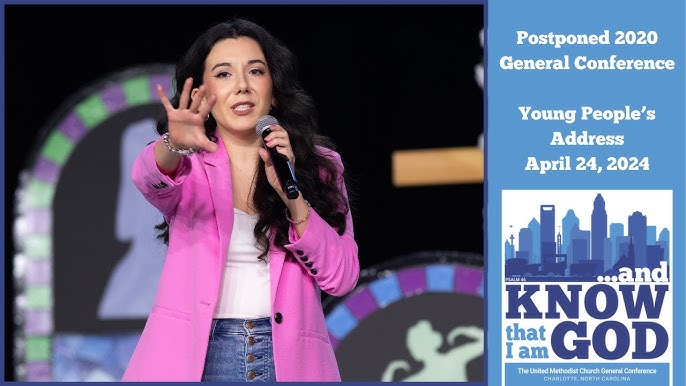







 A Gracious Graffiti